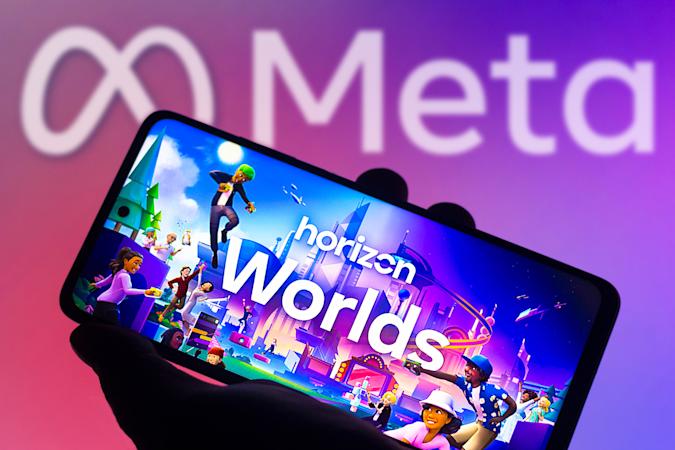
The vision of Meta’s metaverse is starting to take shape after a couple of updates over recent weeks. There have been a few announcements recently, including attempting to launch their own currency again, as well as new tools to encourage creators to build worlds in Horizon Worlds to create a more engaging space for users to explore. These are starting to paint a pretty clear vision on how the future will be shaped by Meta.
Meta experimenting with a web-based version of Horizon Worlds
Meta CTO, Andrew Bosworth, recently tweeted that they are currently working on a web version of Horizon Worlds. This is similar to the way Decentraland works. While the VR experience is still the best way to explore and engage with this environment, being able to access this via a web browser or mobile device would make Horizon Worlds far more accessible to consumers.
New creator tools to help build the creator economy
With his announcement earlier this week, Meta CEO Mark Zuckerberg outlined some new functionality they are looking to add into Horizon Worlds, Meta’s major foray into the metaverse. Initially being released to a handful of creators, new tools will allow these creators to experiment with new ways to monetise their creations within Horizon Worlds. After receiving feedback from these creators, these tools will be released to more people to test. These tools are designed to create a new revenue stream for creators to earn as they build.
Some examples of this new monetisation functionality are locking certain parts of a world behind a paywall. The ability to portion off sections like this creates an intriguing insight into what the future could look like in the metaverse, allowing streaming services and news outlets a way to maintain some financial independence in this new space as they currently do.
But this will come at a cost, with Meta reportedly taking 47.5% of all sales in fees from things sold within Horizon Worlds. This comes from a 30% hardware platform fee for anything sold through the Meta Quest store, as well as an additional 17.5% in Horizon platform fees. Due to the Meta Quest being the only way to buy apps for the Quest at the moment, it’s hard to see them changing this fee structure any time soon.
However, it is worth noting that companies such as Apple and Sony have recently received a lot of negative coverage due to their monopoly over app/game stores. These companies have been accused of developing an environment that prevents a competitive market, preventing third parties from selling in these stores. Results of these lawsuits will be important to see how Meta might react to their stance of a standalone, owned and operated store.
What does this mean for creators?
From a creator perspective, while there is no legacy of revenue generated from Horizon Worlds creations, the concept of giving nearly half of their earnings to Meta might cause some to question the value. This could create a challenging balancing act, where creating a price point for a product needs to be high enough for the creator to justify the work involved and the Meta fees, while also making it accessible for the growing audience exploring Horizon Worlds.
As a way to incentivise creators, Meta is now looking to launch a bonus program to reward creators for achieving goals given to them each month by Meta. Bonuses will come in the form of a monthly cash payout. For now, these bonuses will be based on engagement and time spent exploring worlds built by creators, but may eventually include rewarding those who embrace using new tools.
What about NFTs?
Last month, Meta announced that they would be incorporating NFTs into their social media platform Instagram. From May, users will be able to upload and share NFTs across the social media platform. However, this is just the first step, as Meta will eventually look to monitise sales of NFTs within the platform.
This is a simple approach for Meta to start to get more involved in the NFT market, without needing to invest much time or effort. However, this will likely give them a lot of insight into the perceptions of NFTs from their users, including helping them gauge interest to see if it is something Meta needs to invest more into. This will likely be the first step in Meta’s NFT approach, with these likely having a bigger part to play in the future, especially within their own metaverse environments.
Meta’s own currency
Hidden behind all of this is Meta’s recent announcement that they would try to establish their own virtual currency. Rather than being built on a blockchain like other new currencies, this appears to be more like Meta tokens people can use to buy items within Facebook and Instagram. This puts the currency more inline with the likes of Roblox, with the company able to control all aspects of it and means it would be virtually impossible to transact outside of Meta properties.
This isn’t the first attempt to do this, after their failed attempt to build ‘Libra’ in 2019. Libra, later renamed Diem, was condemned by politicians and the banking industry in the US as they believed it would undermine existing currencies. Housing this new currency within Meta environments will likely eliminate some of the conjecture around this, but will not remove the concern many have around a company the size of Meta having its own currency.
It is clear that Meta is building a space for people to connect, engage, create, and earn a living, all of which highlight the promise of the metaverse. With their own currency, it means that everything in this world will remain solely owned by Meta. This does not align with others entering this space, as competitors attempt to build Web 3.0, where internet ownership sits with the masses, Meta is still trying to maintain ownership by the few.