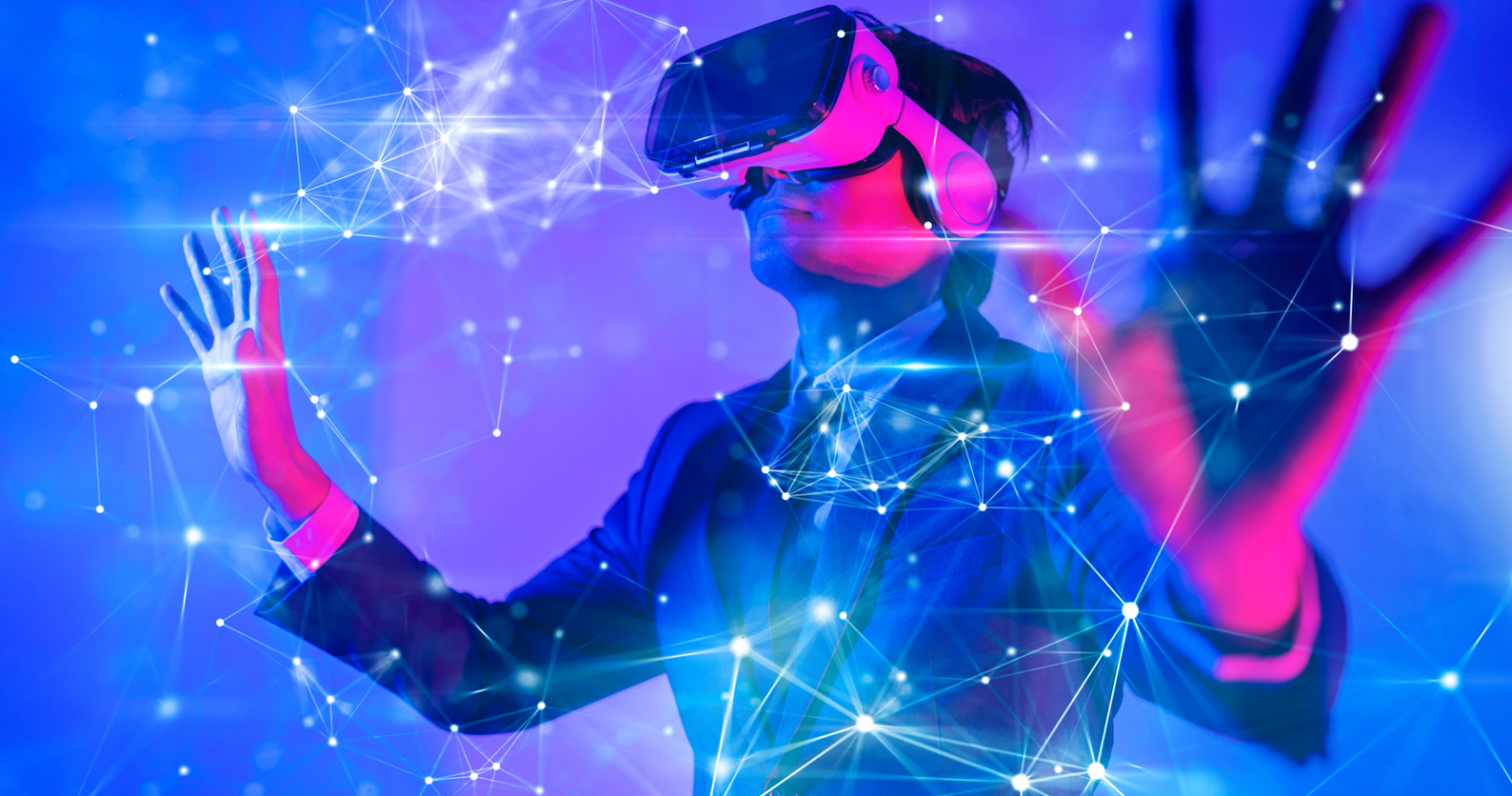
A number of companies are really diving into the metaverse, looking to build out their own product offering to encourage people to use their version of the metaverse. But as we are seeing more and more companies investing into this space, consumer engagement is still minimal in a lot of these areas. This raises the question around how important is the metaverse really in terms of shaping our behaviours into the future.
How will familiarity and ease of use compete with consumer appetite for innovation and exploration? Let’s look at a couple of key challenges that may prevent the metaverse from fully reaching the potential some see for it.
Digital vs Real World
Current established examples of a virtual world where people can ‘live’, such as Roblox and Fortnite, have built a foundation of exploration and connectability. These digital worlds take elements of the real world, but also offer twists on these to create something unlike what can be experienced in the real world. However, what initially helped drive many people to explore in this space, and companies to begin developing their own metaverse solutions, may now cause many consumers to move away from these virtual experiences in the future.
The explosion that drove many companies to shift into the metaverse was helped by the pandemic, which saw people seeking solutions to connect with people as they continually felt isolated. As the pandemic fades from immediate impact, unlocking opportunities for people to reconnect in person, the promises of the metaverse are taking a hit.
In New Zealand, for example, we are seeing huge numbers of Kiwis looking to travel overseas, to explore, work, and reconnect around the world. During the pandemic, this was almost impossible, resulting in people looking for alternative ways to discover new experiences. But, with the borders opening again, what people really want to experience is the world around them, rather than the virtual worlds before them. As immersive as the idea of the metaverse can be, it still does not compare to being able to meet people, and explore new environments, in real life.
Immersion vs Simplicity
One of the most desirable elements of exploring the metaverse is the immersive capabilities that this can offer. While Fortnite and Roblox have created an easy entrypoint for consumers to jump in and explore the metaverse, major tech companies are investing billions in hardware to develop solutions to bring the metaverse into an AR/VR world. This is going to be a key driver in getting consumers to engage in these new worlds in the future, as highlighted by a recent report by Sprout Social, who revealed that just 24% of consumers were interested in the metaverse, while 39% were interested in augmented (AR) and virtual (VR) reality. With the likes of Microsoft, Meta, Samsung, Snap, Google, and Apple all in various states of development in AR/VR technology, the future of tech appears to rely very heavily on this.
Doubling down on the desire to create a more immersive experience, French company Actronika unveiled their haptic vest, which is designed to provide real life sensations for things experienced within the virtual world. Meanwhile, Meta’s recent teaser on what the future of their Quest AR/VR hardware will look like, reveals technology that can utilise hand gestures and requires someone to essentially wear a watch or bracelet.
These examples help to show the importance companies are placing on creating worlds that compel people to stay and experience everything, and make it as simple as possible for people. But this leads to one of the real challenges that are likely to prevent people from fully entering the metaverse, which is the paradox between an immersive experience within the metaverse and the instant gratification people are currently accustomed to. In short, simplicity is likely to be the largest barrier that will prevent the metaverse from really establishing itself as the future of internet consumption. Human behaviour has evolved with the advent of smartphones and Google, to get instant access to information whenever needed.
It is hard to perceive consumers shifting away from something that has become a staple of human behaviour, as the smartphone has become. Main media consumption is likely to remain relatively the same in the future, as consumers still flock to smartphones and TV, likely multiscreening across both. However, when consumers do intend to enter the metaverse, they will likely do so in a highly engaged way. This is where the key to the metaverse future lies, not in replacing the way people consume the internet, but in the way they engage with entertainment and gaming.
Conclusion
Game companies have already done a solid job in developing their own environments that already act as a metaverse. The objective of these games is to provide a space for people to connect with friends, be entertained, and to establish an environment that allows for user creativity. This is exactly what Meta is trying to deliver as they evolve their social media platforms to function more inline with this. In providing these features, platforms begin to make an immersive world which will see high user engagement and long term time investment
While it is unlikely that the metaverse will completely change how consumers behave and consume content, what it does offer is a way for people to immerse themselves into a world, one in which their attention and connection to this virtual world around them could be more engaged, and less distracted. The truth is that, while there are a lot of interesting opportunities we can explore within this space, it’s very hard to see the metaverse completely replacing a number of things that we almost take for granted today.