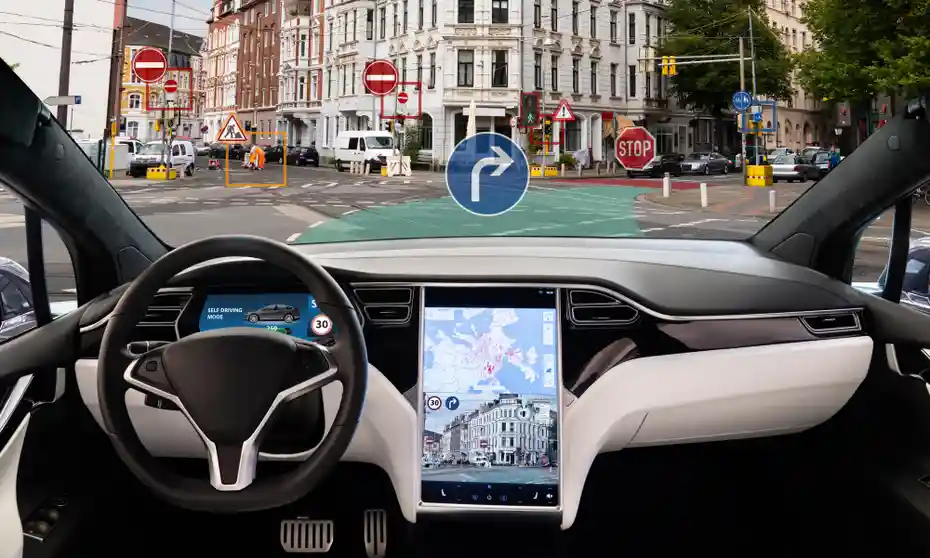
The rise of electric cars has really captured the attention of Silicon Valley, with a number of high profile companies diving into the electric car revolution. These new companies are not beholden to the historical challenges and failings of the automotive industry, freeing them to design new and innovative vehicles. Tesla is the most well known example of this, but there are many others who are seeking to claim a place in this burgeoning market.
In electric cars, those in Silicon Valley see plenty of new opportunities. Part of the promise of electric cars is the possibility to overhaul a number of legacy aspects of vehicles, and begin to build more technologically advanced vehicles with new functions. One such ability many companies are exploring is to make these cars fully self-driving (FSD).
Self-driving cars are not a new concept. Google started testing driverless cars as far back as 2009. While the technology now exists, and a number of trials have been launched, the results have not been perfect. The paradox with self-driving cars is that they are designed to improve the safety of passengers, but after 363 crashes occured in the USA alone in 2021 between Tesla and Honda when their respective self-driving functions were enabled. Some of these instances were down to human error, rather than a fault with the technology, but it does outline some major hurdles that need to be overcome before the technology can be trusted.
The biggest barrier is safety
Recent testing by the American Automobile Association (AAA) found that a number of autonomous vehicles (AV) failed to prevent accidents in some key scenarios. Tests conducted used three different vehicles that had their own self-driving functionality, including the 2021 Hyundai Santa Fe’s Highway Driving Assist, the 2021 Subaru Forester’s EyeSight, and the 2020 Tesla Model 3’ Autopilot. Results showed that when the situations were predictable, each of the vehicles performed well to avoid any collisions or crashes.
These tests were around low speed situations where another car is going in the same direction but traveling at a slower rate than the AV, forcing the AV to adjust speed accordly. All three AVs were able to recognise this and adjust speeds accordingly. Another test involved a simulated cyclist, in the same lane and moving in the same direction as the AV. All three vehicles were able to detect the cyclist, apply braking, and avoid any impact with the cyclist.
Where these three AVs struggled, however, was when a vehicle or cyclist moving in the opposite direction but veering into the lane of the AV. Only the Tesla was able to recognise the other vehicle and apply the brakes to avoid impact. In the case of the cyclist, both the Hyundai and the Tesla were able to detect this and brake accordly, but the Subaru struck the cyclist on all tests.
This does help to highlight that, while the technology is evolving and is beginning to be able to add some level of safety, there is still a lot of work that needs to be done. While companies are continuing to improve here, there is a major mindshift that likely would need to be made by consumers in order to really harness some of the new opportunities that AV and self-driving cars can offer.
Consumers would need to let go of the wheel
Current efforts to create driverless cars are built into existing cars, looking to set up new controls to override traditional controls. Tesla, for example, offers some self-driving functionalities in their cars right now, but they insist that drivers maintain their hands on the steering wheel at all times, so they are able to take control if needed. However, as cars are increasingly becoming more aligned with computers than vehicles, there are more opportunities to experiment with fresh ideas.
At CES 2020, LG unveiled their self-driving car of the future. Aesthetically resembling something more akin to a bus than anything futuristic and sporty, but it is the interior that reveals a potentially dramatic change to the way people experience driving. The most confronting aspect of the interior of this vehicle, is the complete lack of a steering wheel.
This will likely cause a lot of discomfort for many to think about right now, the knowledge of giving complete control away to a computer and having no ability to manually override if something goes wrong. LG’s vision is that their smart car will likely not be available until 2030, so there is time for a consumer mindset to shift to a state of acceptance for this loss of control.
If you’re no longer driving, what would people do instead?
The rationale for the removal of any consumer steering functionality is logical if the technology is able to deliver a safe experience for everyone. If people are able to truly give up the driving experience, it begins to open up a world of new possibilities for comfort and media consumption. LG’s design for the cars of the future puts these possibilities at the heart of what they are trying to showcase, creating a mode of transport that resembles something more akin to a multimedia hub than that of a car.
The idea suggests that car journeys will be more inline with first class air travel than it would to the current experience. LG’s experiment focuses on the comfort of being in this vehicle, with built-in speakers allowing for music to still maintain a key role in consumer experiences while driving around. LG, however, wants to take this a step further, offering an opportunity for passengers to be able to lie back, relax, and watch a movie on the big screen that comes built in. This screen can also be used to show a live view of the front of the car, so people can still see where they are going. The seat layout in this concept car sees two sets of seats facing each other, allowing for a much easier conversational flow to take place between people in the car, compared to current cars.
This is a fascinating preview of what the future of automotive transport could look like. While tech-first companies attempt to prove that they can build a solution that works, others are already looking to what new ways they can make the most of engaging people when they no longer need to focus on the task of driving. This might still be a long way off, but the potential to make driving journeys a fresh way to relax and reconnect with people, makes for a promising future for road trips.