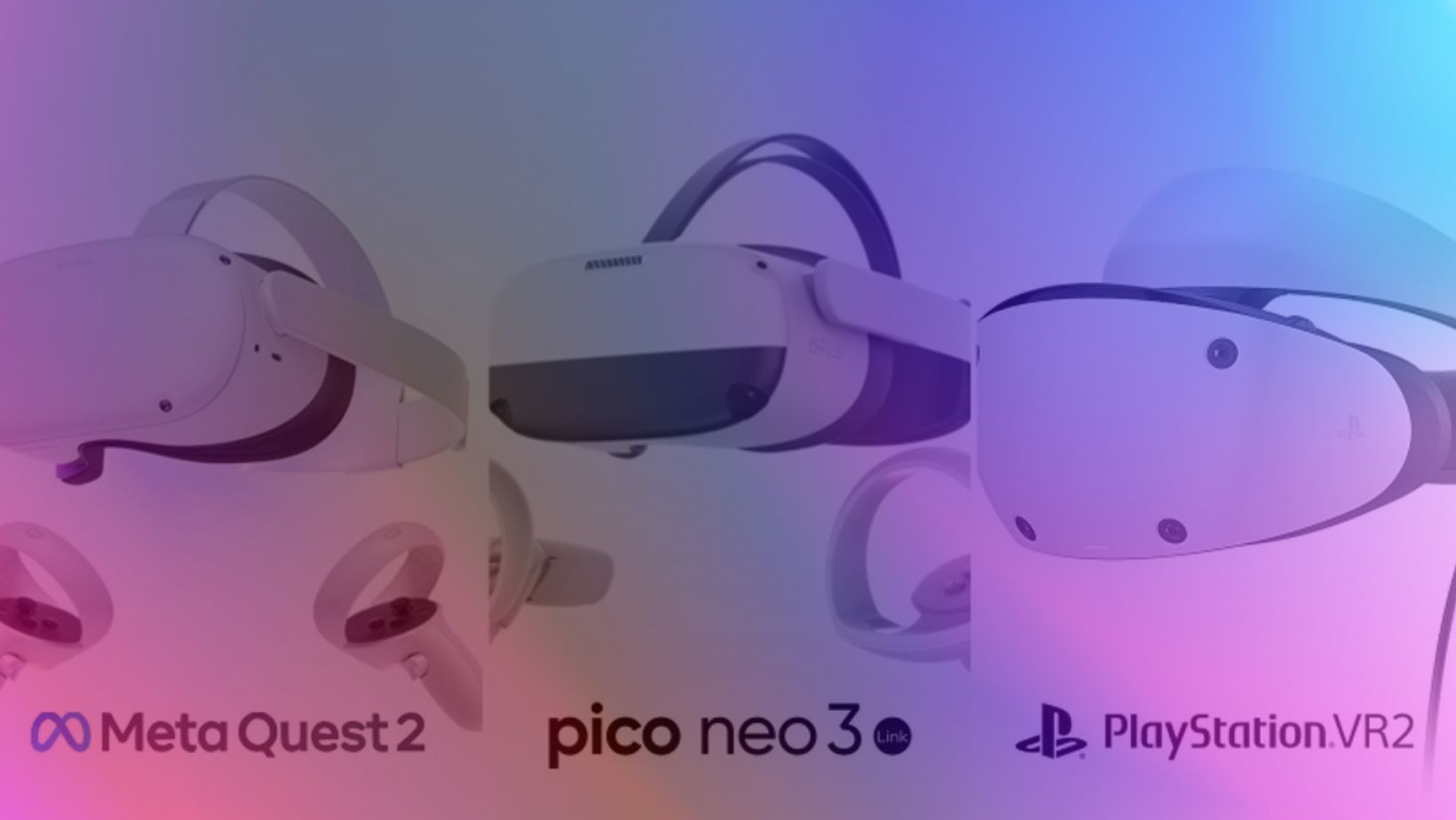
Meta, which currently represents roughly 90% of the VR headset market according to IDC, is about to see renewed competition. This comes off the back of a couple of key announcements by both ByteDance and Sony at the Tokyo Game Show last week. Both companies announced new iterations of established versions of their VR headsets.
ByteDance, owner of the popular social video app TikTok, purchased the VR headset Manufacturer Pico Interactive last year. The Tokyo Game Show saw ByteDance unveil the new Neo3 Link, a VR headset that is to cost less than the Meta Quest 2 and already has over 100 games available. In addition, the Neo3 Link will be able to access video content, including movies. Pico Interactive has seen some success in the VR space already, with the IDC report outlining that Pico is the second biggest VR headset maker at 4.5%.
Sony finally revealed more details of their new PlayStation VR2 (PSVR2) headset, which they have been teasing for months. The first iteration of this VR headset was highly successful, positioned as likely the most commercially successful VR headset until the Meta Quest 2’s release. While both the Neo3 Link and Quest 2 are wireless, standalone headsets, the PlayStation version requires a connection to a PlayStation console. This creates some limitations for users but also means the capabilities available to Sony with their headset are far more powerful.
The reason this is important is that both Sony and ByteDance can offer different aspects that Meta is unlikely to be able to compete with. Sony is uniquely positioned to dominate in the gaming space, providing powerful gaming experiences in a way that Meta cannot. Meanwhile, ByteDance has seen its TikTok platform become one of the biggest video content platforms in the world, positioning them well to own video consumption through VR over Meta.
Meta’s dominance in this space is about to come under threat from several new and established players. For Meta to stay ahead of the rest, they need a solution that provides something that others cannot. The prospect of business VR functionality is something that is still in its infancy, but the likes of Meta and Microsoft are currently exploring this. But the key to Meta’s success might be in not doing one thing exceptionally, such as Sony in the gaming space, but providing an avenue for consumers to do many different things well. This is why the metaverse sits at the heart of Meta’s play in the VR space.