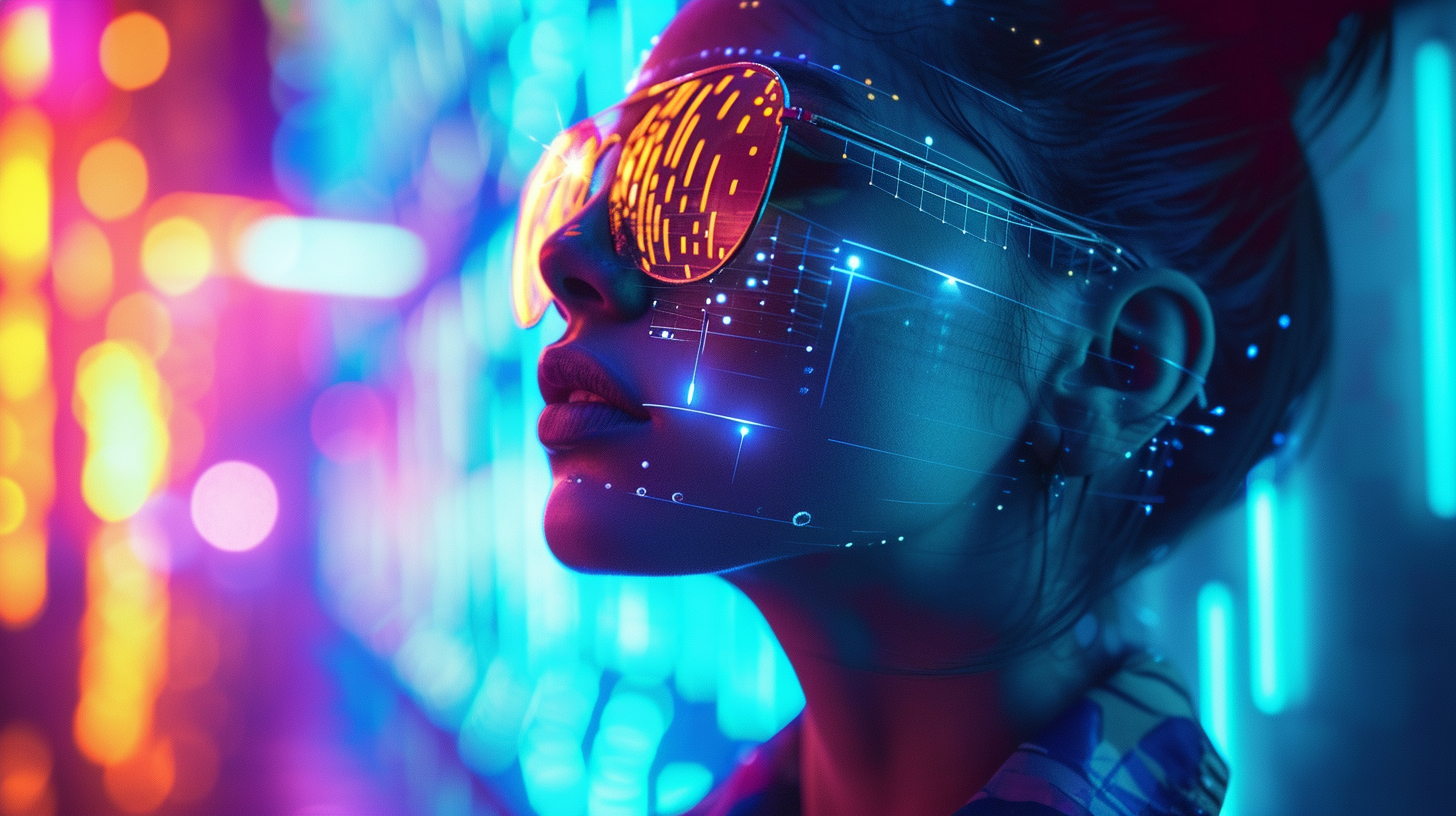
Influencer marketing has been a growing trend across social media throughout the medium. Over the last few years, however, there has been a growing trend of “AI Influencers”, characters with unique personalities, but they are not real. AI influencers are growing in popularity, and some are already starting to generate a large revenue stream. Until recently, the work required to create these AI influencers was arduous and time-consuming. Now that there are so many AI tools available, it’s worth exploring how feasible it could be for someone to set up a successful AI influencer.
While it is relatively easy to create an AI-generated image, it is another thing to create a persona with unique yet consistent images and writing style for captions. Text-to-video is continually improving, but it has yet to be feasible for a realistic AI influencer. The vision is to create an AI influencer but make as much of the process automated. To make this viable, however, finding a solution for one of the biggest challenges with text-to-image platforms is important.
Consistent Characters
The rise of AI image generation has helped to produce amazing results and continues to improve. However, despite all of the advancements in these models, one facet has remained elusive: creating a consistent character. Despite best efforts and specific prompting, AI will always produce a different result and a different person each time. It is possible to prompt specific characteristics, and running the model enough times will likely produce similar characters. But, given the hyper-critical nature of social media, similar is not good enough.
To develop an AI influencer’s brand, it seems crucial to create unique characteristics to help them stand out. Successful AI influencers like Lil Miquela and Aitana Lopez are proof of this. Lil Miquela’s distinct hairstyle and anime-inspired face, and Aitana Lopez’ pink hair become iconic and easy to recognize. Once identified what these characteristics would be for an AI influencer, it can make prompting easier. Fashion style and hair color can easily be recreated with prompting, but unique tattoos are almost impossible to consistently recreate. Through a lot of testing, with various prompts around distinct characteristics, ethnicities, and styles, a hero image was chosen as the base for all future images.
It was then crucial to try and resolve the consistent facial appearance. In the process of creating enough content for the first month of social posts, well over 200 images were produced, with none bearing any resemblance that was anything close to the original image. There are AI image-generation models that can be trained to produce somewhat consistent models, but they require training on a set of images of the same face, which is only possible if you are looking to create an AI persona that looks like someone already famous, like a celebrity. Ethically questionable, and against the spirit of creating a distinct influencer.
One section of AI that has remained relatively hidden is the ability to run images and videos through face-swapping technology. This is likely hidden by choice, as it can easily be used for very inappropriate means. If used appropriately, this can be a solution to resolve the consistent character challenge. After training one of these models and running some tests, the results overall were pretty effective. Most images appeared to show the same person after running it through the face-swapping platform.
Through key prompt engineering in text-to-image AI platforms, and then running the output through a face-swap platform, it is possible to produce a consistent look. The next challenge is creating a voice to accompany these images. Something that will help build a personality into the captions to help explain why each image is being posted. This step is much easier, and can also be used to help develop a content strategy to shape the personality.
Giving AI A Voice
Any large language model (LLM) is capable of producing a version of a ‘voice’. With some work on what similar influencers are posting, it is easy to train an LLM to understand and create similar variations, and with some tweaking, it can be adjusted to give more personality. With this, it is easy to make the voice appear more casual, serious, humorous, whatever the desired result is.
The nuances of creating a unique voice are difficult for LLMs. While LLMs can replicate things, they are still incapable of developing a true ‘unique’ feel. So after training an LLM on a specific style, it was then important to make further adjustments, review, and feedback to the LLM to continually improve. To make it more authentic, it is actually probably better to get LLMs to give some direction, but then to write the captions yourself. But the vision is to streamline this and writing captions and content would create a lot of work. So after some initial prompting, an agreeable output from the LLMs was developed.
From here, it is possible to feed more information around this AI influencer into an LLM and help it shape an idea of what this ‘person’ is all about. With all this information, it is then possible to get the LLM to build out a content strategy for the first month of this AI Influencer’s existence. Taking it a step further, it is also possible to train the LLM on ideal prompting for the text-to-image platform as well, further streamlining the process.
So How Did It All Work?
To create a post for Instagram, the process consisted of using LLMs to build an idea of what the post should be about and to write the caption. Then it was time to build out the image, taking prompts from the LLM and making any further adjustments to help improve and reshape the output. Finally, a face-swapping platform to give the appearance of the same person being used.
It is possible to build out a month’s worth of content in one go, but it is important to be agile and to make changes as more learnings come through. With this in mind, a weekly cadence was set up to create one post a day for 7 days. At first, these were a mixture of content styles and settings. Then some experimenting of having themed weeks, where all 7 posts would be connected. This made for a much simpler workflow, especially as most text-to-image platforms produce numerous images for each prompt.

Building An Audience
The ambition was to reach 1,000 followers in the first month of going live with the account. Ambitious for an unknown personality. There are several ways to attempt to build an audience and a following for influencers. Consistent content posting is very important, and that was an achievable goal using the previously mentioned techniques. But more needs to be done and for this test, it was important to not spend any money to build the following.
With this in mind, the approach was to periodically add people who follow similar accounts. Instagram limits the amount of people that can be added each day, so the goal was to add up to 100 accounts to see if they would follow back. The assumption was that at least some would follow back, and the hope was that it grows more organic following the back of these users adding the AI influencer back.
Results After The First Month
The strategy of adding a random group of people each day did manage to drive solid engagement with the AI influencer. Not only was it possible to build out roughly 1,000 followers in the first month, engagement on each post was very encouraging. Successful posts saw upwards of 70 reactions, with less successful posts seeing around 20 reactions.
The entire process of creating a week’s worth of content ended up taking 20-30 minutes a week, for 7 posts. Adding a handful of accounts each day took another 5 minutes per day. All up, it was around an hour a week of work. Relatively light touch, but there are plenty of missed opportunities.
As an experiment, it was important to focus on reducing the time involved in creating content and trying to build a brand. But with that comes a lot of missed chances to build a connection with followers. Commenting on others’ content, replying to some of the messages, and exploring collaborative opportunities with other emerging influencers would have been possible, but would have created a lot more work. These are important facets of building a successful influencer and could be something worth considering moving forward. The key will be to automate that, where possible.
Overall, is this something worth exploring? The short answer is yes. But while the approach tested was about driving efficiency, there is a lot more hidden work required to build a successful account. This experiment is only a month in, and there are already several learnings that can be taken from this. The approach will continue, with some adjustments.


