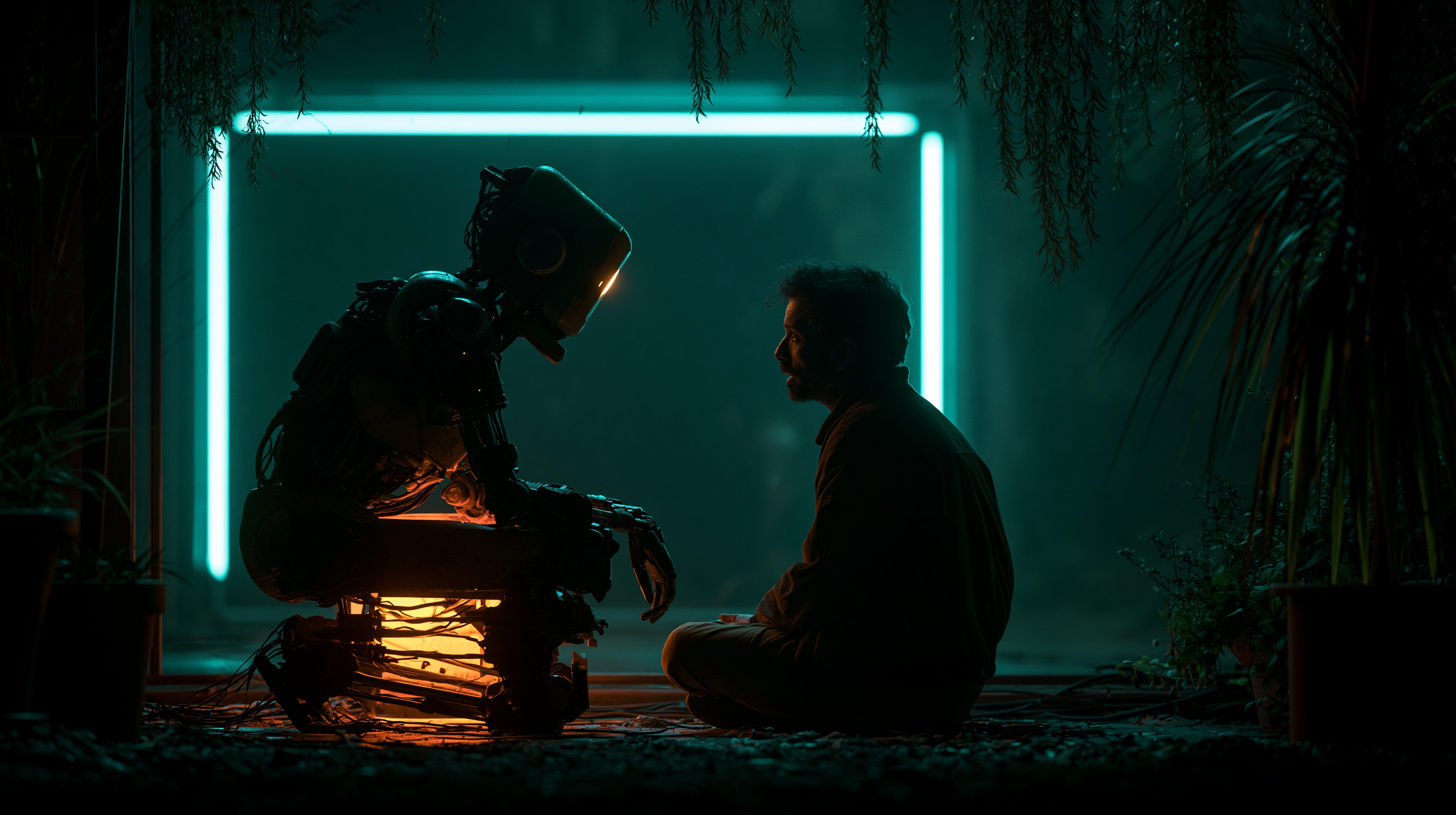
This is an early working extract from a chapter of my upcoming book on artificial intelligence, identity, and the changing meaning of human intelligence. It is shared here as a draft reflection and may evolve as the book develops.
Agency is not a singular construct, and people find agency in numerous ways across multiple domains. For some, the expression of agency can be found through intellectual output, analysis, rationalisation, and creativity. For others, it can be shaped through relationships, experiences, social environments, or emotional connections. Likely, most people find agency through many or all of these domains, so those who do not shape agency through intellectual accomplishment will likely experience little immediate disruption. Their sense of self is anchored elsewhere.
This is a crucial counterpoint to this emerging threat, because artificial intelligence may not be a threat to intelligence itself, but rather a disruption to the signals of intelligence we have historically identified to represent it. Historical classifiers of intelligence have been shaped through proxies. Structured thinking, the ability to articulate through language, and confident elocution have been viewed as indicators of intellectual capability. While not necessarily a true reflection of intelligence, these signals help shape organisational and institutional recognition of talent.
Educational systems often excel at identifying those who perform well within structured environments, rather than demonstrating judgement within complex, real-world situations. A high-performing student may not always be the most effective outside of the classroom. These proxies have served a purpose, operating as a shortcut to faster evaluation of capacity, but they have also blurred the distinction between genuine understanding and the ability to express it effectively.
Artificial intelligence is now beginning to expose a new reality. Anyone can now produce polished, well-structured analysis in seconds, resulting in these surface-level signifiers of intelligence beginning to feel less impactful. The result is that questions begin to shift from one’s ability to articulate an argument to whether the argument itself is sound.
In this sense, AI may not diminish intelligence, but it may help clarify where legitimate intelligence actually exists. Through the widespread accessibility of fluent intellectual output, the underlying substance behind this intelligence becomes easier to distinguish. Those who have crafted their own judgement through experience, failure, analysis, and reflection may become more visible, not less.
This outcome hinges on a critical assumption, however. That individuals, institutions, and organisations continue to value genuine understanding over the appearance of it. People still need to choose to engage with complexity, rather than bypassing it through AI. The time dedicated to developing real insight cannot be abandoned in favour of immediate and frictionless solutions. This is where the uncertainty sits. If the conditions that produce intelligence are eroded, then the distinction between real understanding and the appearance of understanding may become harder to protect.
For those who see their intelligence as a large part of their identity, this is a huge threat. AI threatens to create intense fragmentation of a defining personal trait. Think of anyone who has spent years building expertise, for example, a doctor, a lawyer, an analyst, an artist, a strategist, or a writer. The struggle to learn, improve, fail, adjust, modify, and grow has not simply produced knowledge. It has produced a sense of competence, agency, and self-understanding. The journey is not just about acquiring specific knowledge; it is about the formation of an internal narrative around competence, progression, and values. In this context, intelligence is not simply a tool; it becomes a defining characteristic of the self.
AI begins to challenge the meaning of that journey. After years of study, experience, and obstacles overcome, aspects of expertise can now appear compressed into seconds of computational processing. The gap between novice and expert, once a defining distinction, begins to narrow. A person with little experience may use AI to help produce work that resembles the product of years of discipline.
This produces a deep level of cognitive dissonance. Those who have dedicated their lives to building expertise now find themselves confronted with systems capable of producing comparable results without the same level of struggle. The question is no longer whether their work can be replicated; it is how they understand themselves when the thing that they built their identity around no longer feels theirs exclusively.
This is where the disruption moves beyond economics and productivity. Expertise has never been only a professional asset; for many, it is an aspect that helps them define who they are. It represents discipline, endurance, sacrifice, status, and earned capability. If AI can replicate the deliverables of expertise without requiring the formation that produced it, then the meaning of expertise itself begins to change.
The thing that artificial intelligence has not prepared us for is an uncomfortable question: Who are we, if the things we have built our identity around are no longer exclusively ours? This existential threat has not been forced onto us before in history. For much of history, intelligence remained one of the most reliable markers of human distinction. Technology could distribute information, amplify productivity, and accelerate communication, but interpretation remained with us. People were, in many ways, defined by what they understood and what they could do with that understanding.
Artificial intelligence does not simply remove this foundation; it replicates it at a surface level. The outputs of intelligence remain, but the process that once gave those outputs meaning is no longer required in the same way. The distinction between knowing and not knowing, something that was once separated by education, practice, and lived experience, begins to shrink to a well-formed prompt or question and an almost instantaneous response.
For some, this will be liberating. The reduction of cognitive burden could help create a space for other dimensions of life to take precedence. Intelligence is not the only source of meaning. For those who ground their identity elsewhere, this shift will feel less like they are losing something, instead gaining something new. There might also be all-new forms of identity formation that will emerge from this, which we have yet to see or experience, that could help replace intelligence through experience.
But for those who connect intelligence and identity together, this emergence of AI is more confronting. What replaces intelligence if intelligence is no longer a defining measure of value? In this space that was once occupied by intellectual distinction, what takes its place? There are no clear answers, and this is why questions need to be asked. What is at stake with this growth of AI is not simply how people will work, new skills they need to develop, how professions will evolve.
The real question is whether the conditions for producing genuine human development are still capable of existing in a world where imitation and immediacy rule. Will people navigate through harder life paths when they no longer need to? Intelligence has always been sought after. Civilisations rose and fell based on the ability to find and acquire it. Social and organisational hierarchies have been created around the scarcity of intelligence. Identities have been shaped by its presence. Now, intelligence is ambient, available to all in seconds.
The question should not be what artificial intelligence will do to human intelligence. The real question is what human beings will do with themselves when intelligence alone is no longer enough to define who they are. When intelligence is no longer enough to help define the self, the temptation might then be to seek recognition from something that appears to understand us completely.